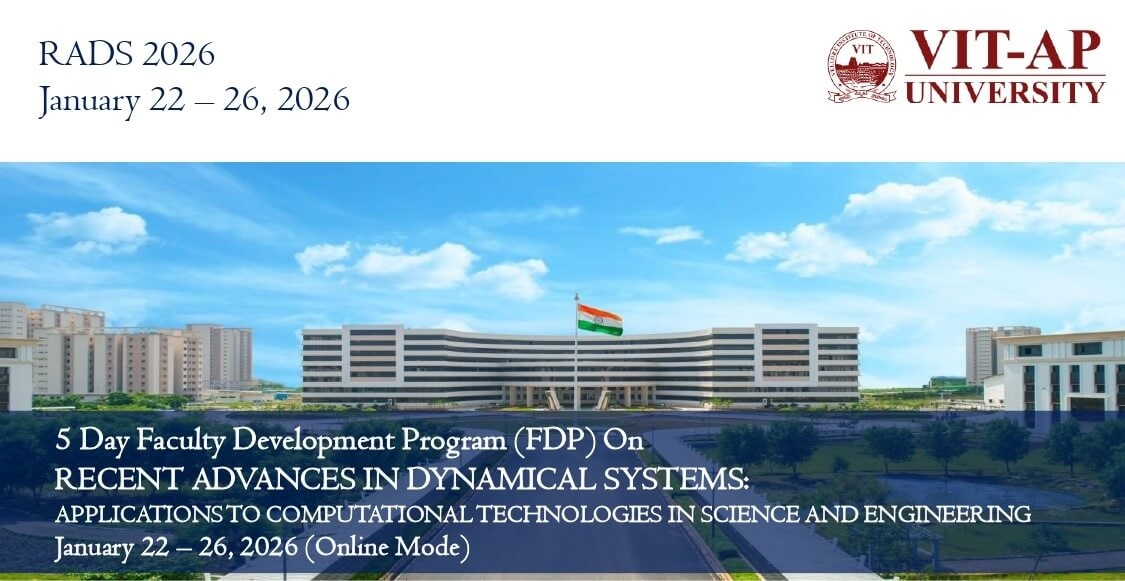
About the FDP
The Faculty Development Program (FDP) on Recent Advances in Dynamical Systems: Applications to Computational Technologies in Science and Engineering is a comprehensive and interdisciplinary training initiative designed for academics, researchers, and industry professionals. This program will delve into the critical roles of Fixed Point Theory, Control Theory, Fractal Geometry, and Nonlinear Dynamics in shaping modern technological landscapes. Participants will explore how these foundational mathematical concepts provide the analytical tools necessary for developing robust, efficient, and intelligent systems across diverse fields, including artificial intelligence, autonomous systems, data science, and quantum computing. The FDP aims to bridge the gap between abstract mathematical theory and its practical application, fostering a deeper understanding of the principles that underpin cutting-edge technological innovation.
The FDP brings together leading academicians, researchers, and industry experts to discuss modern mathematical tools, methodologies, and problem-solving techniques that are shaping the future of science and technology. Through a blend of theoretical lectures, problemsolving sessions, and interactive discussions, participants will gain exposure to both pure and applied aspects of mathematics, empowering them to pursue advanced research and enhance their teaching practices.
This program serves as a platform for faculty members, research scholars, and postgraduate students to enhance their expertise, explore interdisciplinary connections, and stay updated with the latest developments in the mathematical sciences.
Objectives:
The major objectives of the FDP is to encourage interdisciplinary research in the areas as listed below:
Primary Themes:
The expert-led sessions of the FDP is focused more on the topics including but not limited to the following:
This theme explores the foundational role of fixed-point theorems as a powerful tool for analyzing the convergence and stability of iterative algorithms. Participants will learn how these theorems are applied in areas such as optimization, machine learning models, and neural network training, providing a theoretical guarantee for a solution's existence and the algorithm's convergence.
Focusing on the application of modern control strategies, this theme addresses the challenges of creating reliable and autonomous systems. It will cover topics like adaptive control, optimal control, and robust control as they apply to robotics, autonomous vehicles, and AI-driven decision-making systems. The emphasis will be on integrating mathematical control principles with AI algorithms to enhance system performance and safety.
This theme investigates how nonlinear analysis can be leveraged to improve the performance and understanding of deep learning architectures. Participants will explore concepts such as chaos theory, bifurcations, and attractors to gain insights into the complex behavior of neural networks and large-scale data systems. The focus will be on using these principles to address challenges related to model stability, generalization, and training dynamics.
This concluding theme serves as a synthesis of the program's content, highlighting the interdisciplinary applications of the mathematical theories explored. It will showcase how concepts from fixed point theory, control theory, and fractal analysis intersect with AI, cyber-physical systems, and predictive modeling. The objective is to demonstrate how these theoretical advancements translate into tangible technological innovations and future-ready solutions for complex real-world problems.
About the University:
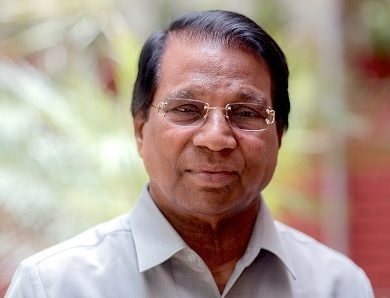
Established under the guidance of our founder and Chancellor, Dr. G. Viswanathan, VIT-AP University stands as a premier institution dedicated to learning, teaching, and research excellence. Globally recognized for its significant contributions, the university has earned the top position among emerging state private universities in India, according to the Outlook University Ranking 2022, 2023 and 2024. VIT-AP University encompasses seven schools, including the School of Computer Science and Engineering (SCOPE), the School of Electronics Engineering (SENSE), the School of Mechanical Engineering (SMEC), the School of Advanced Sciences (SAS), the School of Social Sciences and Humanities (VISH), the School of Business (VSB), and the School of Law (VSL). Our esteemed faculty members, drawn from the best institutions nationally and internationally, employ innovative curriculum designs. Building on VIT’s 41-year legacy of educational and research innovation, VIT-AP University aligns with the tradition of excellence, blending academic rigor with industry partnerships. With a vision of establishing itself as one of the world's premier academic hubs, the university offers a dynamic campus environment conducive to holistic education and personal growth. For more details, please visit: https://vitap.ac.in/
About the School:
The School of Advanced Sciences (SAS) at VIT-AP University comprises the Departments of Mathematics, Physics, and Chemistry. Our teaching methodology prioritizes critical thinking through Project-Based Learning (PBL), cultivating an atmosphere where students are urged to question, investigate, and engage in research across various scientific domains. Concentrating on the natural sciences, SAS strives to furnish a strong groundwork for undergraduate, graduate, and doctoral students, integrating recent scientific and technological progress. The school provides a range of programs including a Dual degree B.Sc.-M.Sc. in Data Science, MSc programs in Data Science, Physics, and Chemistry, as well as Ph.D. opportunities in Mathematics, Data Science, Statistics, Physics, and Chemistry. For further information, please visit: https://vitap.ac.in/allschools/SAS
About the Department:
The Department of Mathematics at our university stands as a beacon of academic excellence, boasting a distinguished faculty body of over 80 members hailing from diverse regions across the country. These esteemed professors bring with them a wealth of expertise and research interests that span a wide array of fields including Nonlinear Dynamical Systems, Fixed Point Theory, Control Theory, Fractal Theory, Mathematical Modelling, Integral Transformations, Operator Theory, Hydrodynamics Stability, Thermal Convection, Algebraic Coding Theory, Cryptography, MHD Boundary Layers, Perturbation Methods, Stochastic Differential Equations, Approximation Using Linear Positive Operators, Fluid Dynamics, Nonlinear Mathematical Programming Problems, Mathematical Biology, Graph B-Coloring, Cosmology, and beyond. Furthermore, the department is committed to fostering academic growth and offers a comprehensive range of mathematical courses tailored to meet the needs of various programs offered by the university. Among its offerings are two prominent programs: the Dual Degree Programme in B.Sc.-M.Sc. Data Science, M.Sc. Data Science program, Ph.D. program in Mathematics, Statistics and Data Science, all of which provide students with a robust foundation in mathematical theory and its practical applications. Through its dedicated faculty, diverse research interests, and extensive course offerings, the Department of Mathematics continues to be a cornerstone of academic excellence within our institution.
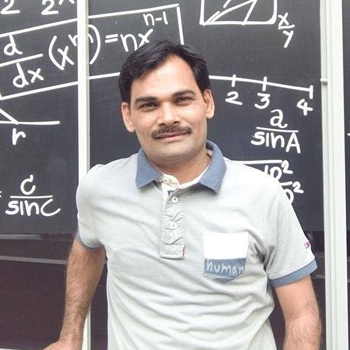
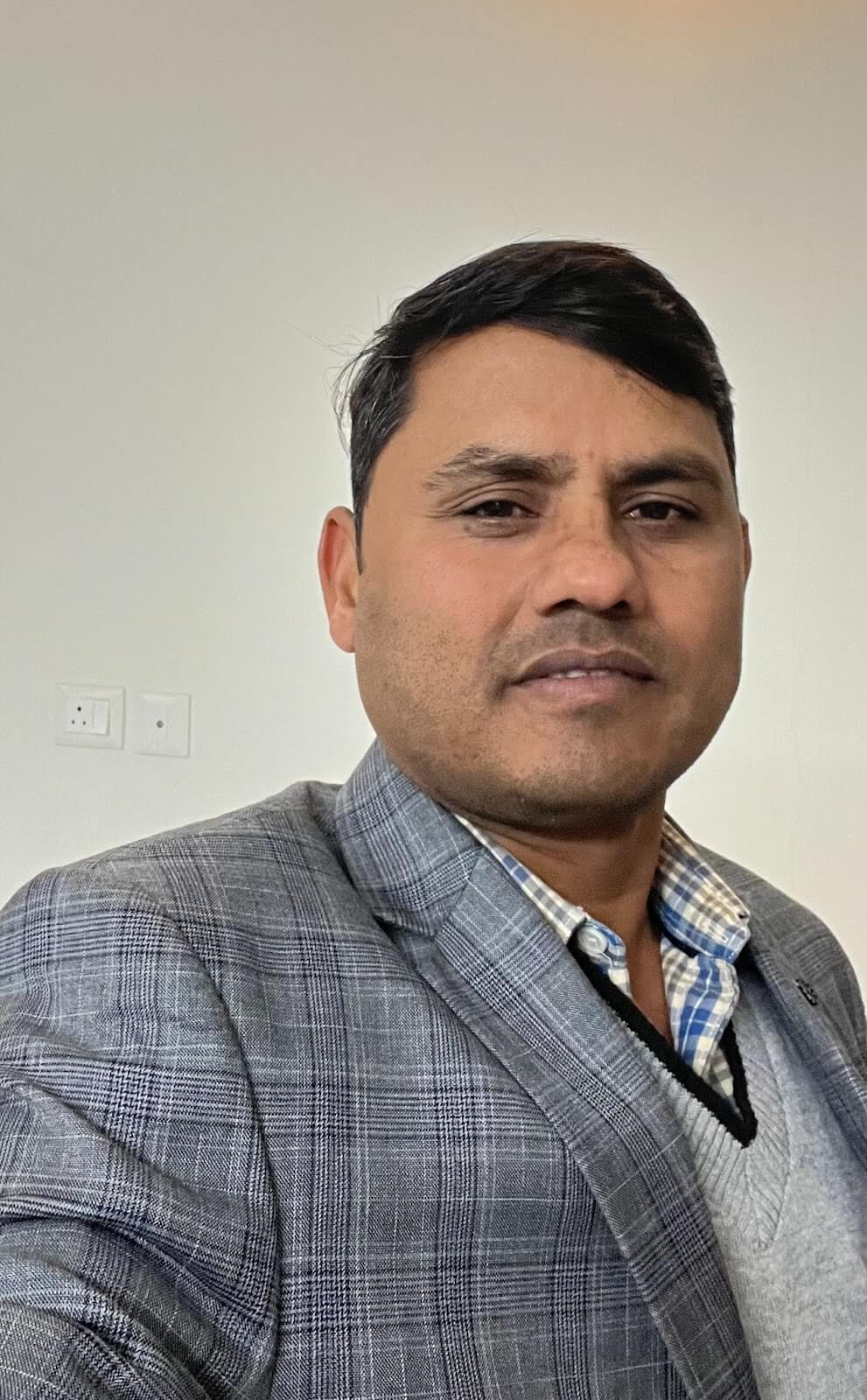
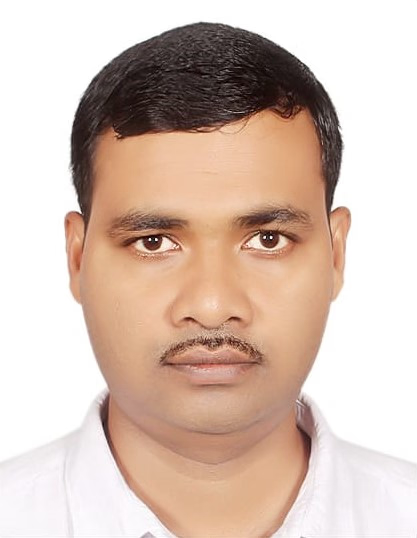
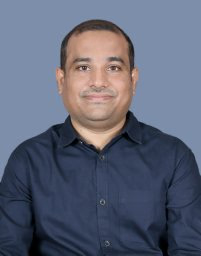
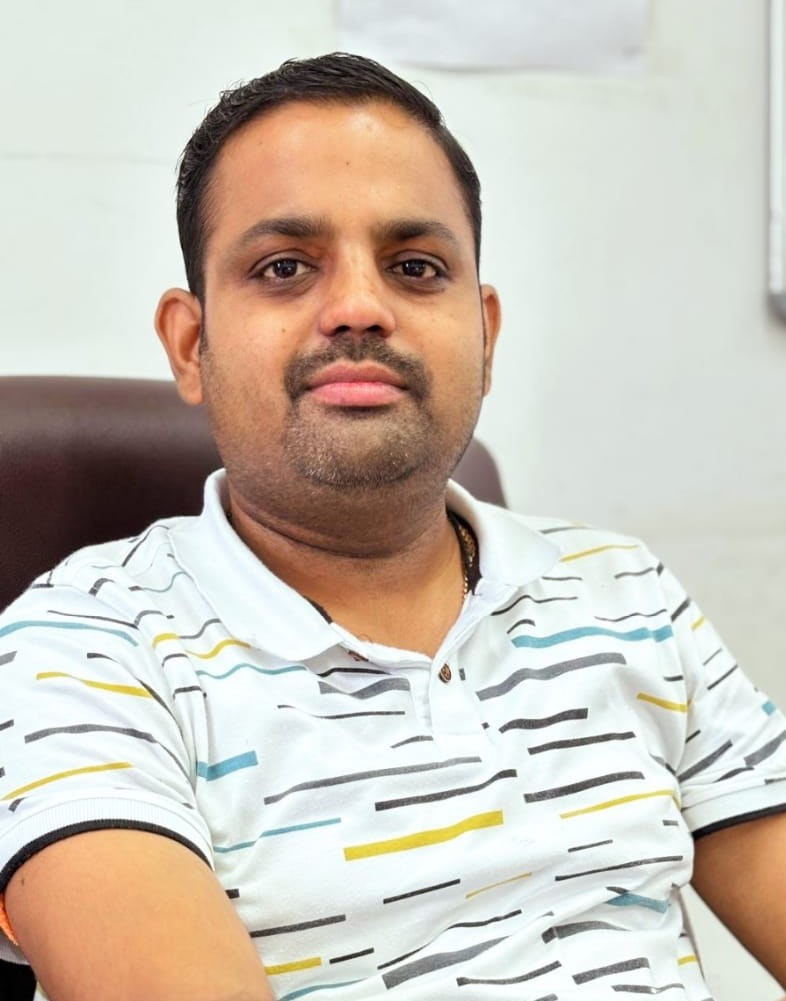
Invited Speakers
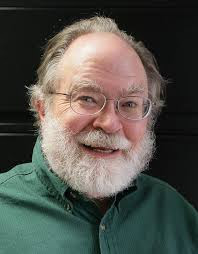
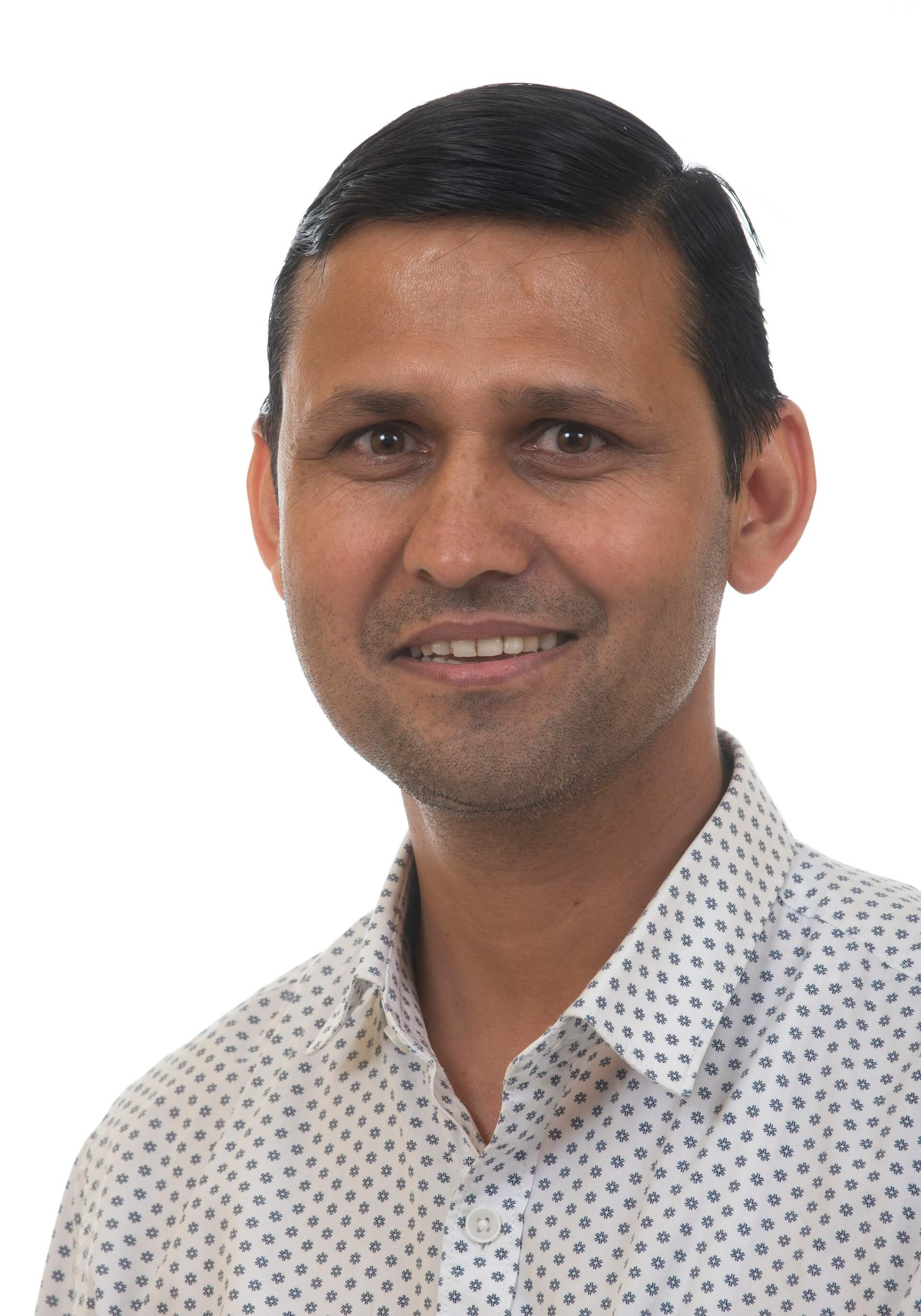
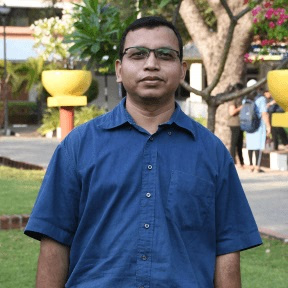

Who can register?
Category-wise Registration Fee:
| Indian Faculty Members and Industry Professionals | INR. 600/- |
|---|---|
| Indian Research Scholars and PG Students: | INR. 300/- |
| Foreign Participants | $10 |
Or scan the QR Code:

Important Dates
| Opening Date for Registration: | 25/09/2025 |
|---|---|
| Closing Date of Registration: | 20/01/2026 |
| FDP Dates: | 22/01/2026 to 26/01/2026 |
Chief Patron
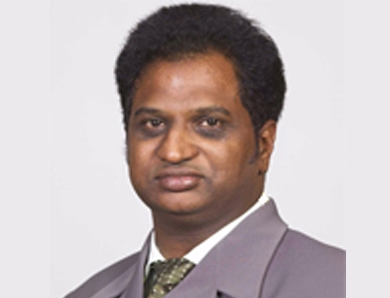
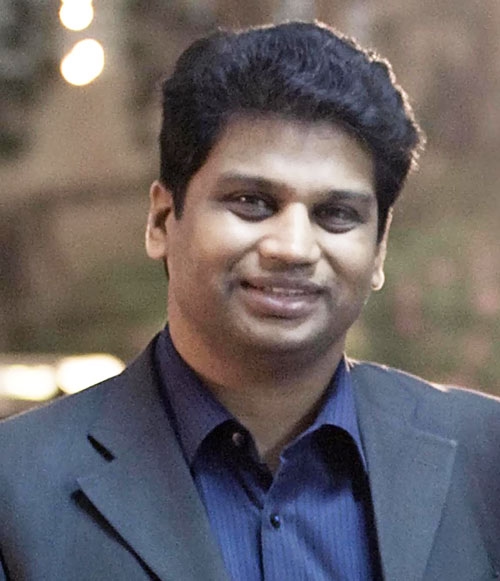
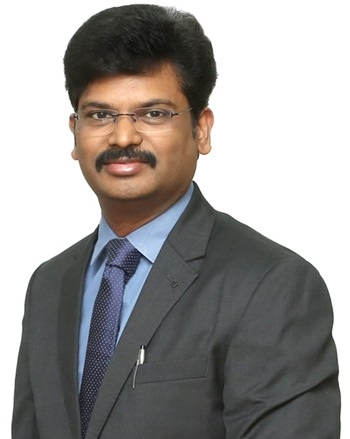
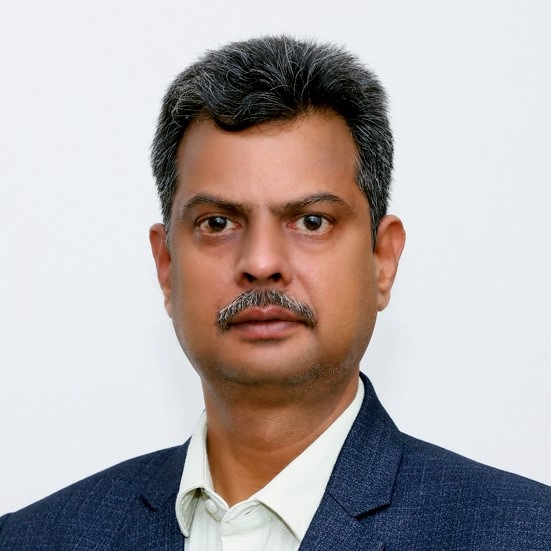
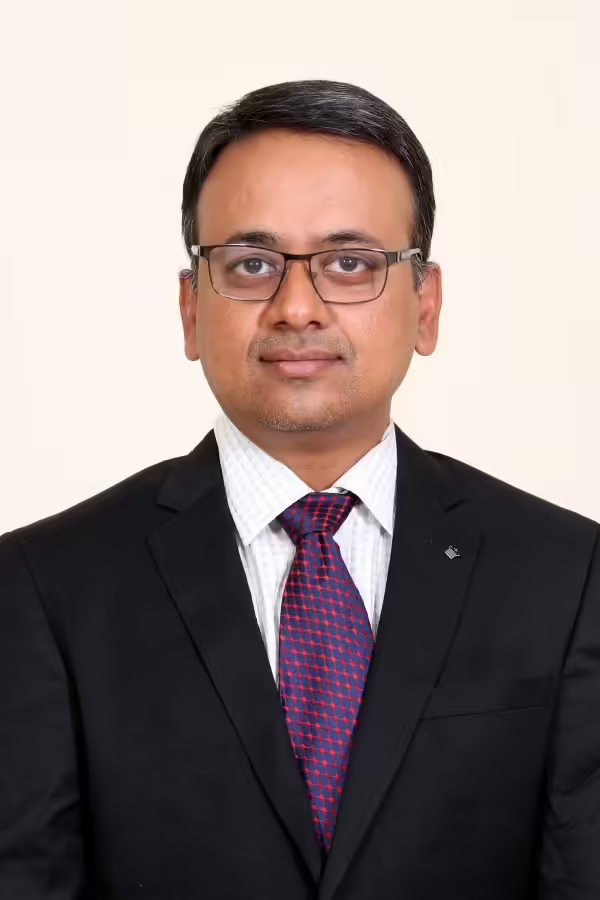
Patrons
Organising Secretaries
Dr. V. Ramakrishna Reddy
Dr. Ravi Kumar Bandaru
Dr. Sukanta Nayak
Dr. Ramesh Prasad Panda
Joint Organizing Secretaries
Dr. Yada Nandukumar
Dr. Pradip R. Patle
Dr. Shobhit Kumar Srivastava
Dr. Arun Kumar Yadav
Advisory Committee:
Prof. K. Vajravelu
University of Central Florida
Prof. B. S. Kushvah
IIT (ISM) Dhanbad
Dr. Santanu Koley
BITS Pilani, Hyderabad
Dr. Rahul Shukla
Walter Sisulu University, SA
Dr. Deepesh Kumar Patel
VNIT Nagpur
Dr. B. S. R. V. Prasad
VIT Vellore
Dr. Santanu Mandal
VIT-AP University
Dr. Phani Kumar M
VIT-AP University
Dr. Prashanth Maroju
VIT-AP University
Dr. Manoj Kumar Mishra
VIT-AP University
Dr. K. Mahipal Reddy
VIT-AP University